
AI in Interior Design: What It Can Do and What It Can’t Replace
As an interior designer, I think this is an extraordinary moment.
AI gives us the ability to explore more ideas, move across disciplines and bring imagination to life in ways that were not possible before. I do not think designers should be afraid of that. We should be curious about it.
But the more capable these tools become, the clearer something else becomes too. The most valuable parts of design are still deeply human: taste, instinct, judgment, empathy and a distinct point of view.
Where We Use AI Today
Interestingly, most of the ways we use AI have very little to do with designing rooms.
It is especially valuable on the business side of the studio. We use it to organize meeting notes and next steps, structure administrative tasks, assist with research, work through spreadsheets and calculations, help with bookkeeping-related organization, plan social media and edit text when we want to make sure something is clear and concise.
That may sound less exciting than generating an entire room in seconds, but it is where we see some of the greatest value today. Every hour technology can save on repetitive or administrative work is an hour that can go back into the project, the client and the creative process.
Generating an Image Is Not the Same as Designing a Home
AI can create some incredibly beautiful interior images. It can also create a lot of rooms that start to look strangely familiar.
Curved sofas, travertine tables, fluted wood, oversized stone walls, bouclé chairs, giant sculptural pendants, perfectly styled books and, somehow, an olive tree in almost every corner.
Usually beige.
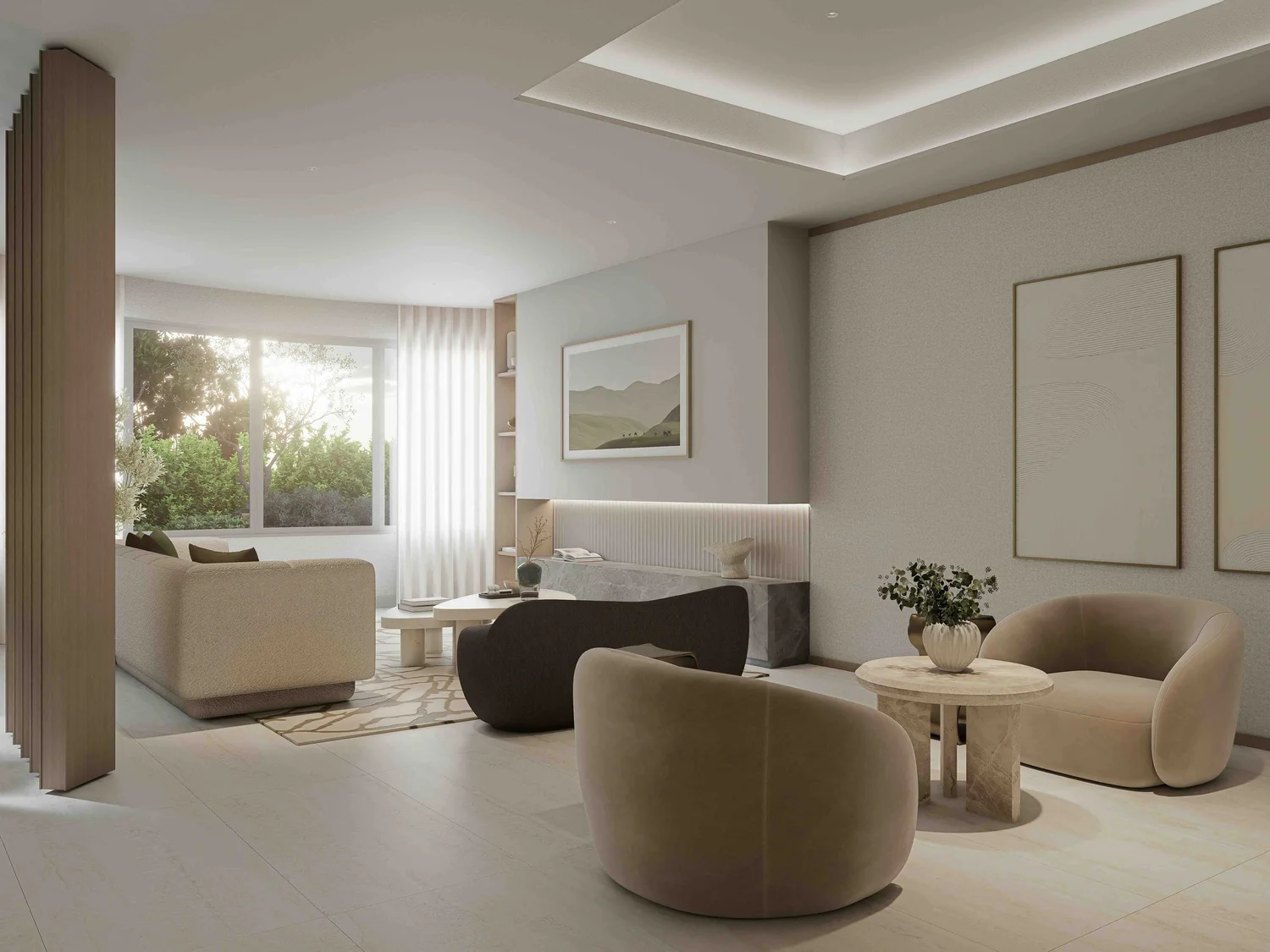

None of those things are inherently bad design. The problem is when they become a formula.
AI is exceptionally good at understanding the visual language of what already looks desirable. Without a strong point of view guiding it, the result can easily become another variation of the same beautiful room.
There is absolutely a place for AI visualization. If you are designing your own home and already have a clear idea of what you want, it can be a useful way to explore possibilities. But creating and developing a concept is very different.
Good design depends on proportion, scale, composition, color, lighting, architecture, materials and how all of those elements interact. A wood tone can look beautiful by itself and completely wrong next to the flooring. A fixture can be stunning and entirely wrong for the ceiling height. A sofa can look perfect in an image and destroy the circulation of the actual room.
AI can generate endless possibilities. Taste and experience are what tell you which ones belong.
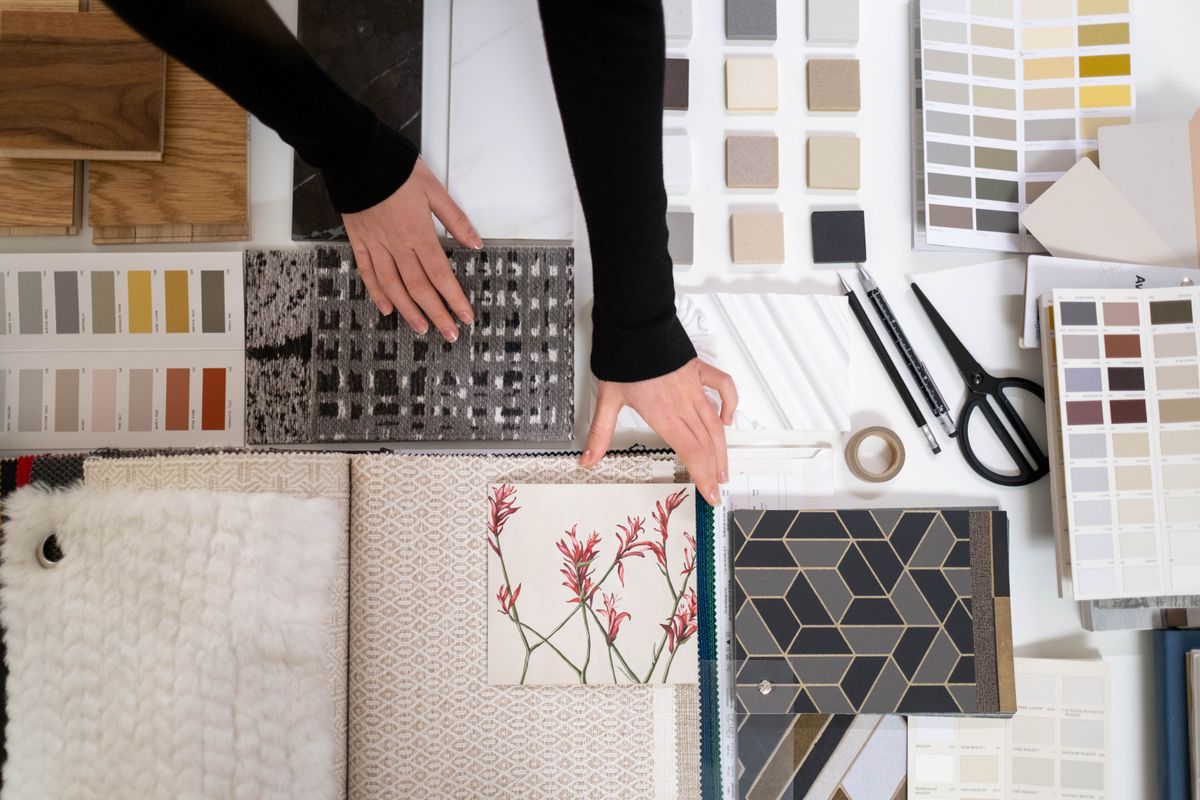
Image: Cottonbro Studio
Then the Design Has to Become Real
Developing a strong concept is difficult. Executing it successfully is another major part of the work.
Real projects involve contractors, fabricators, installers, showrooms, vendors, deliveries, budgets, lead times, measurements, site conditions and hundreds of decisions that affect one another.
A change to the millwork may affect the lighting. A different slab may change the fabrication details. A delayed piece of furniture can affect an installation schedule. Something that looked simple on paper may require several conversations between the designer, contractor and fabricator before it can be built correctly.
A large part of interior design is coordination. It is knowing who needs what information, anticipating issues before they become problems and making decisions when something inevitably does not go according to plan.
Clients Need More Than Decisions. They Need Confidence.
Customer service is not separate from the design process.
Clients should not have to understand every technical issue or carry the stress of every problem happening behind the scenes. Part of our role is to navigate those moments, communicate clearly, find solutions and give the client confidence that the project is moving forward.
Sometimes what a client needs most is not another design option. They need reassurance. They need someone they trust to tell them: we understand the issue, we are working through it, and here is what happens next.
Interior Design Is a Relationship
That human relationship may be the part of design that gets overlooked most when we talk about AI. Interior designers work incredibly closely with their clients.

We learn how they live, what they value, how their families use a space, what makes them comfortable, what they gravitate toward and sometimes what they dislike before they can fully explain why.
Over the course of a project, there are countless conversations and decisions. Some are aesthetic. Others involve budgets, compromises, timing, family dynamics and emotions. A designer has to know when to push an idea, when to reconsider it and when to simply listen.
Because a client is trusting you with something incredibly personal: their home.
For many people, it is one of the largest investments they will ever make. More importantly, it is where their life happens. It is where they wake up and go to sleep. Where children grow up. Where families gather. Where people celebrate, recover, entertain, work and disconnect from everything happening outside.
A home can become a sanctuary.
Being invited into that process is a privilege, and there is a responsibility that comes with it. Designing a home requires understanding the people who will live there, earning their trust and guiding them through a process that can sometimes feel overwhelming.
AI can process information. It cannot build that relationship.
An Extraordinary Tool, Not a Replacement
AI will continue to evolve, and I think that is exciting.
We should use it where it makes us better. Let it organize information, reduce administrative work, assist with research, explore possibilities and make parts of our businesses more efficient.
But interior design has never been only about producing beautiful images.
It is about ideas, judgment and taste. It is about coordination, problem solving and execution. It is about relationships, trust and giving clients confidence throughout the process.
Ultimately, it is about creating a home that feels deeply personal to the people who live there.
AI can expand what is possible. The human part is what makes it meaningful.
Looking for a More Personal Approach to Interior Design?
At Interiors by AC, we combine creativity, technical coordination and close client collaboration to create homes that feel refined, functional and deeply personal.
