
Custom millwork can completely change the way a home feels. Beyond adding storage, it can define architecture, create focal points, introduce warmth and make a space feel more intentional.
The most successful millwork is not simply cabinetry added to a wall. It is designed as part of the room itself, considering proportion, materials, lighting and how the feature relates to the furniture and finishes around it.
From natural wood and stone to glass, integrated lighting and hidden storage, here are six custom millwork ideas we use to create interiors that feel refined, distinctive and made to last.
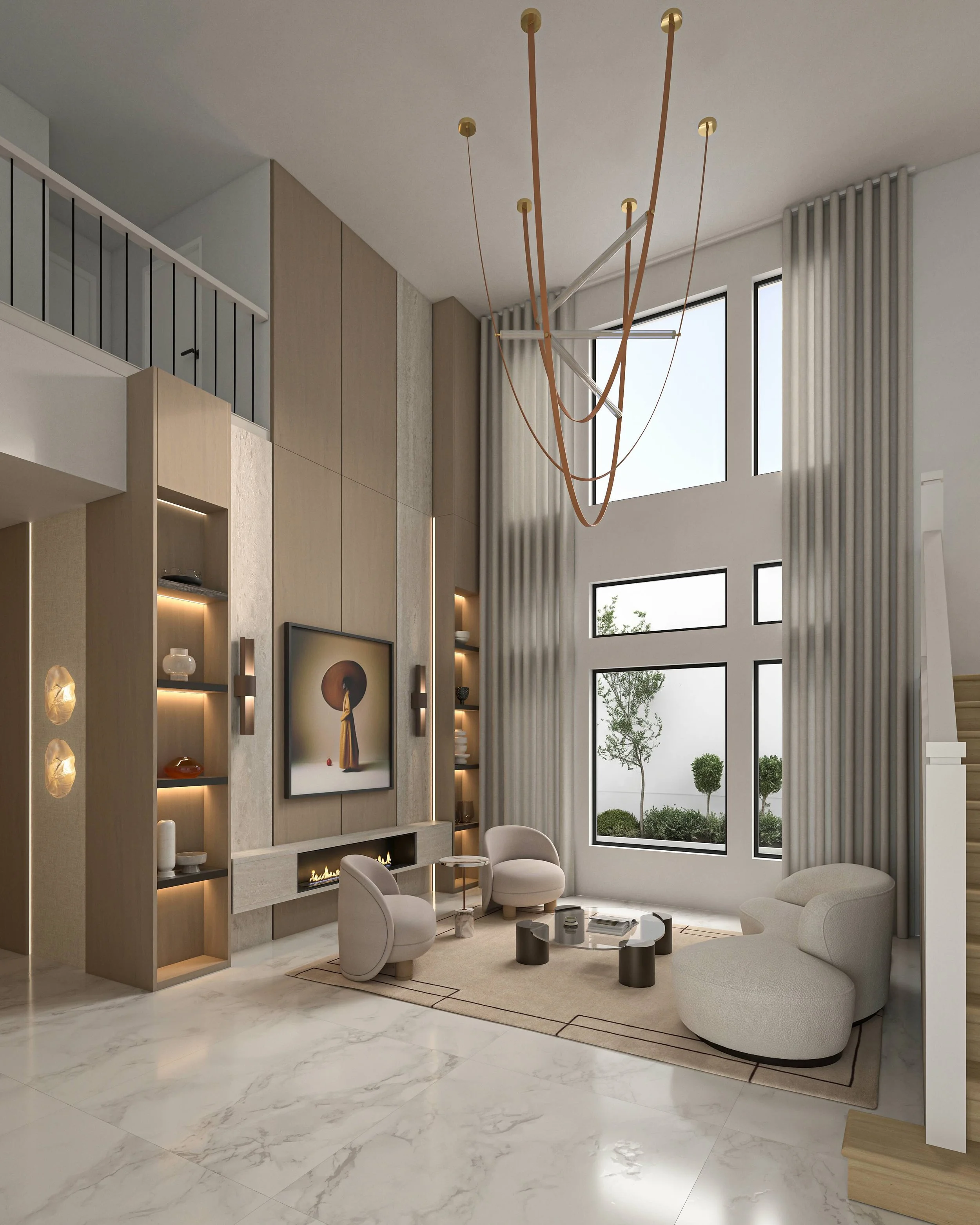
1. Design Millwork as Part of the Architecture
Custom millwork has the greatest impact when it feels integrated into the architecture rather than added after the room has already been designed.
Consider the full height and width of the wall, ceiling conditions, adjacent openings and the proportions of the furniture around it. Extending millwork vertically can emphasize ceiling height, while architectural panels and built-in niches can visually connect different sections of a large wall.
In our Lotus Palm Residence in Boca Raton, the double-height living room uses floor-to-ceiling millwork to establish the architecture of the space. Tall wood panels, open shelving and textured sections work together as one composition rather than a collection of separate cabinets.
The result gives the room structure while still allowing the furnishings and art to remain visually important.
2. Layer Materials to Give Millwork More Depth
One of the best ways to make custom millwork feel more elevated is to avoid treating it as a single-material feature.
Wood can provide warmth, natural stone can introduce movement, metal or glass can create contrast, and textured surfaces can soften the overall composition. These materials do not need to match. They need to relate to one another.
The key is restraint. Rather than using as many finishes as possible, establish one dominant material and introduce contrasting materials selectively. A warm wood veneer, for example, can be paired with natural stone, glass or subtle metal details to create depth without making the millwork feel busy.
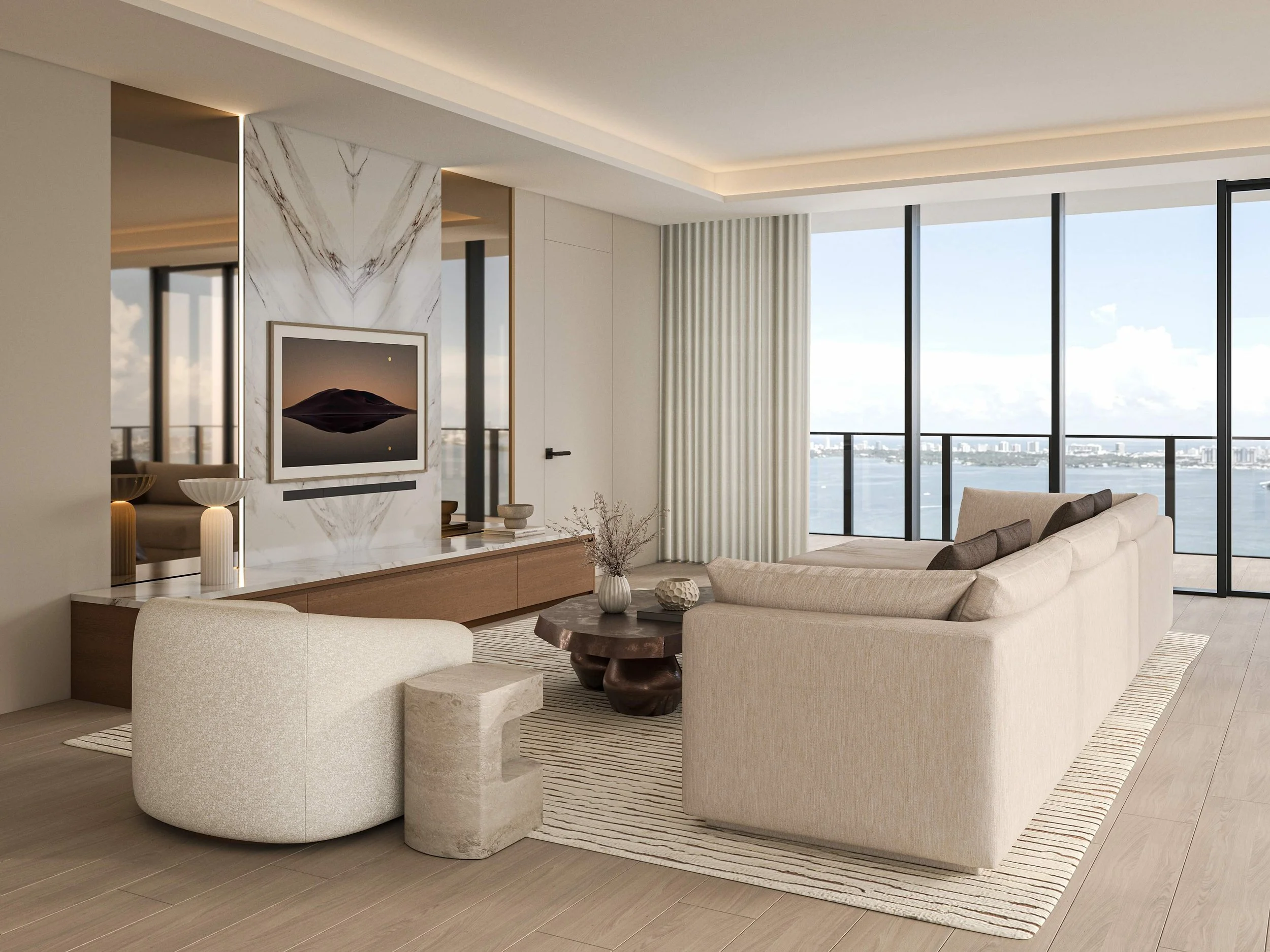
3. Use Natural Stone to Create a Focal Point
Natural stone can transform millwork from functional cabinetry into an architectural feature.
It works particularly well around television walls, fireplaces, bars and other focal areas where the movement and natural variation of the stone can become part of the composition.
At our Elysee Condominium project in Miami, a dramatic stone television wall is balanced by low wood cabinetry and surrounding architectural elements.
The contrast between stone and wood gives the feature depth while allowing both materials to maintain their own character.
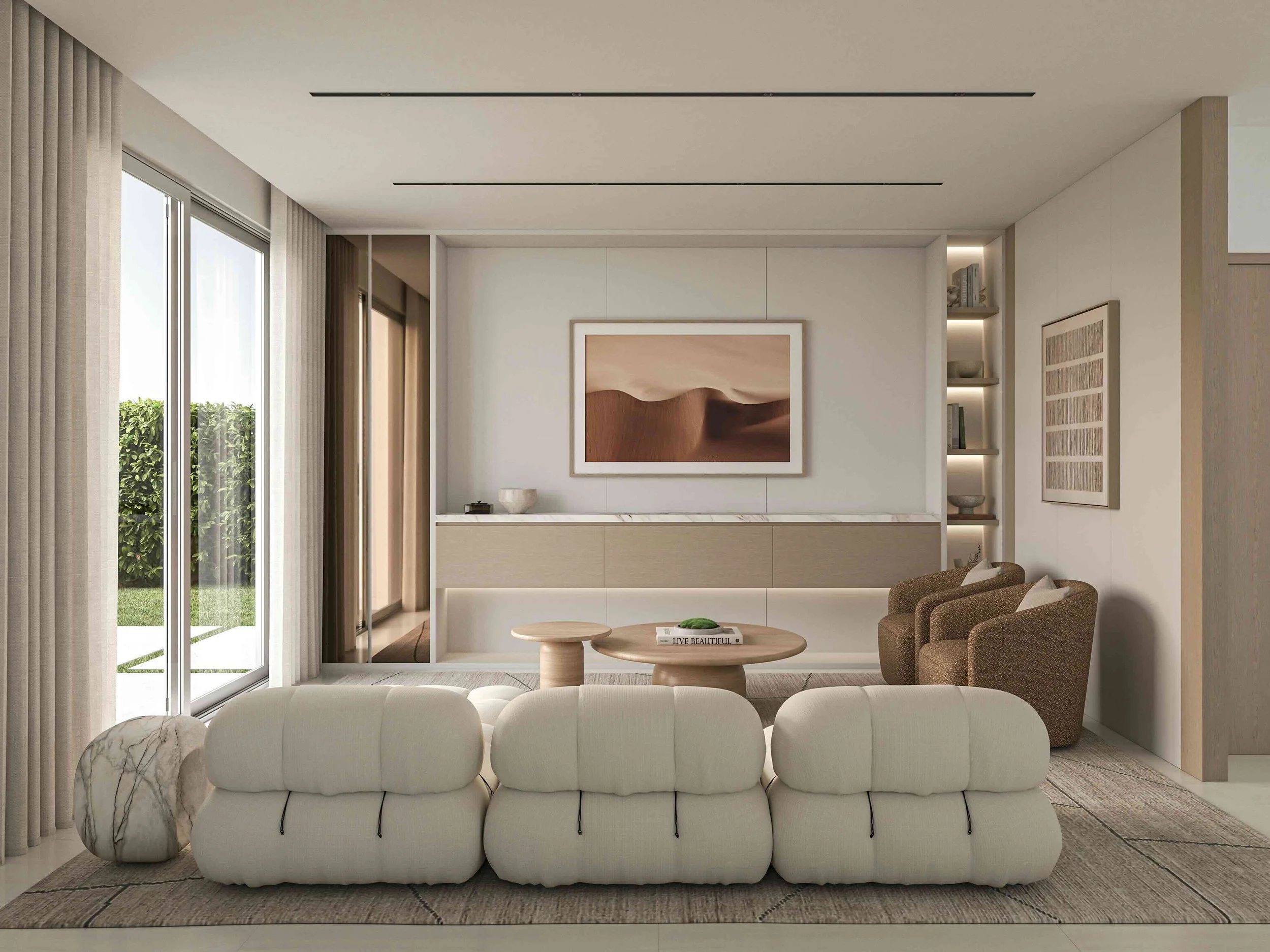
4. Integrate Lighting Into the Millwork
Lighting should be considered while the millwork is being designed, not after it is installed.
Integrated lighting can highlight shelving, reveal the texture of wood or stone, emphasize vertical proportions and completely change the way the millwork feels in the evening.
Concealed lighting is particularly effective because the source itself almost disappears. What you notice instead is the depth it creates around the materials and objects being displayed.
In our Coral Gables Residence , integrated lighting gives the built-in shelving additional depth while highlighting the objects and materials within it.
5. Balance Open Display With Closed Storage
Beautiful millwork still needs to function.
Open shelves are ideal for artwork, books and decorative objects, but too much open storage can quickly make a room feel visually busy. Closed cabinetry provides a place for the things that do not need to be displayed and helps preserve a cleaner overall composition.
We typically like to combine both. Open areas create visual interest and allow the millwork to feel lighter, while larger uninterrupted cabinet fronts provide balance and practical storage.
6. Make Your Millwork Stand Out Without Making It Trendy
Custom millwork is a significant investment and, unlike a sofa or decorative accessory, it is not something most homeowners plan to replace every few years. Designing for longevity matters.
One of the best ways to make millwork stand out while keeping it timeless is through restraint. Establish one dominant material and use contrasting materials selectively rather than introducing several competing finishes.
Warm wood can be paired with natural stone, glass or subtle metal details. Integrated lighting can emphasize the composition without becoming a decorative feature on its own. Texture can create interest without relying on a highly recognizable pattern or trend.
Proportion is just as important. Clean architectural lines, balanced reveals and thoughtfully sized panels tend to age better than overly complicated shapes or decorative details associated with one particular moment in design.
The goal is for custom millwork to feel special because of its materials, proportions and craftsmanship, not simply because it follows a trend.
Creating Custom Millwork That Belongs in the Home
The best custom millwork should feel as though it was always meant to be part of the architecture.
Material selection, storage, lighting and proportion all contribute to the final result. When these elements are considered together, millwork can provide function while also becoming one of the strongest design features in the home.
At Interiors by AC, we incorporate custom millwork into our residential projects as part of the complete interior design, coordinating finishes, materials, furnishings and architectural details to create a cohesive result.
If you are planning a renovation or complete interior transformation in Miami or South Florida, explore our full-service interior design services or get in touch to tell us about your project .
