
A beautifully designed living room should feel polished without feeling staged. It needs to work for everyday life, entertaining and quiet moments while still feeling intentional and visually balanced.
At Interiors by AC, we approach living rooms by considering the space as a whole: layout, architecture, materials, lighting, furniture scale and the way each element relates to the next.
Here are eight living room design ideas for creating a space that feels refined, inviting and thoughtfully put together.
1. Start With the Layout, Not the Furniture
Before selecting a sofa or coffee table, begin with how the room needs to function. The layout determines circulation, conversation areas, sightlines and how comfortable the room will feel once everything is in place.
Furniture should relate to the scale of the architecture rather than simply fitting within the available square footage. Oversized pieces can overwhelm a room, while furniture that is too small can make a large space feel disconnected.
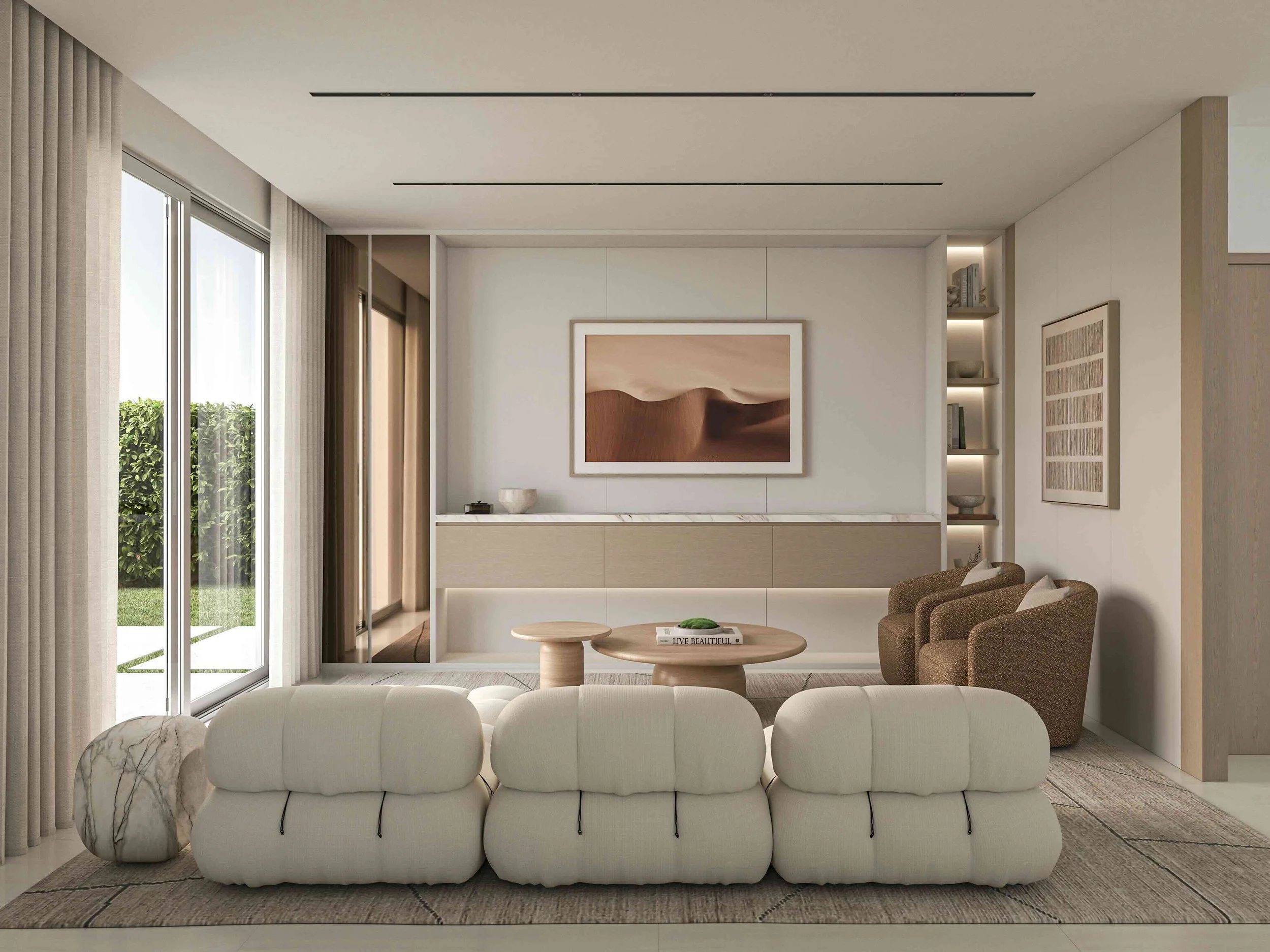
In our Coral Gables Residence , the seating arrangement creates a clear conversation area while maintaining comfortable circulation around the room. The result feels composed without becoming rigid.
2. Create a Strong Focal Point
Every living room benefits from a visual anchor. It gives the eye somewhere to land and helps organize the rest of the room around it.
A focal point can come from a fireplace, artwork, a view, natural stone or custom millwork. The important part is deciding what should command attention rather than allowing several elements to compete.
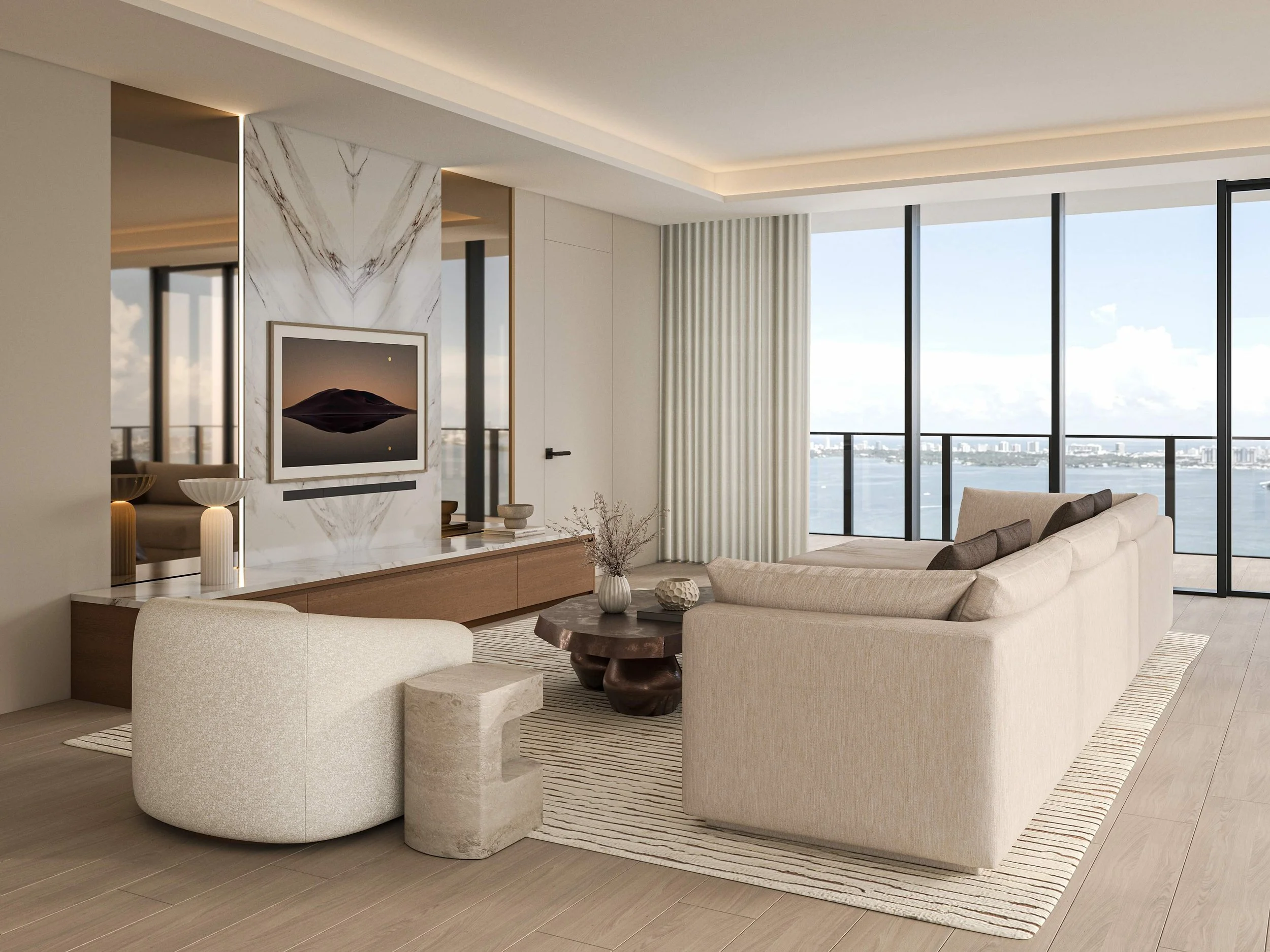
At our Elysee Condominium project in Miami, a dramatic natural stone television wall establishes the main focal point. Low wood cabinetry and surrounding architectural details add depth while allowing the stone to remain the hero.
Custom millwork can be particularly effective because it combines architecture, materials and function in one composition. Explore more custom millwork ideas for creating architectural focal points throughout the home.
3. Layer Materials and Textures
A neutral living room does not need a lot of color to feel interesting. Depth can come from the way different materials react to light, touch and one another.
Natural stone, wood grain, linen, bouclé, wool, glass and metal each introduce a different visual and tactile quality. Combining hard and soft surfaces helps keep a restrained palette from feeling flat.
Think about contrast rather than matching everything. Smooth stone can sit beside textured upholstery, warm wood can balance cooler surfaces, and soft drapery can offset clean architectural lines.
The goal is not to use more materials. It is to use a controlled palette with enough variation to create warmth, contrast and visual depth.

4. Mix Shapes to Create Visual Balance
A room built entirely around straight lines can feel overly structured. Introducing curved and organic forms adds softness and creates a more natural visual rhythm.
Rounded chairs can contrast with linear wall treatments. A curved table can soften cabinetry. Sculptural lighting can add movement above a more architectural setting. The goal is not to make every piece different, but to create enough variation that the room does not feel rigid.
In our Doral Estates Residence , curved upholstered seating and sculptural lighting soften the stronger lines created by the stone, furniture and surrounding architecture.
Although this example is a dining space, the same principle applies directly to living rooms. Mixing geometric and organic forms can make a contemporary interior feel softer and more inviting.
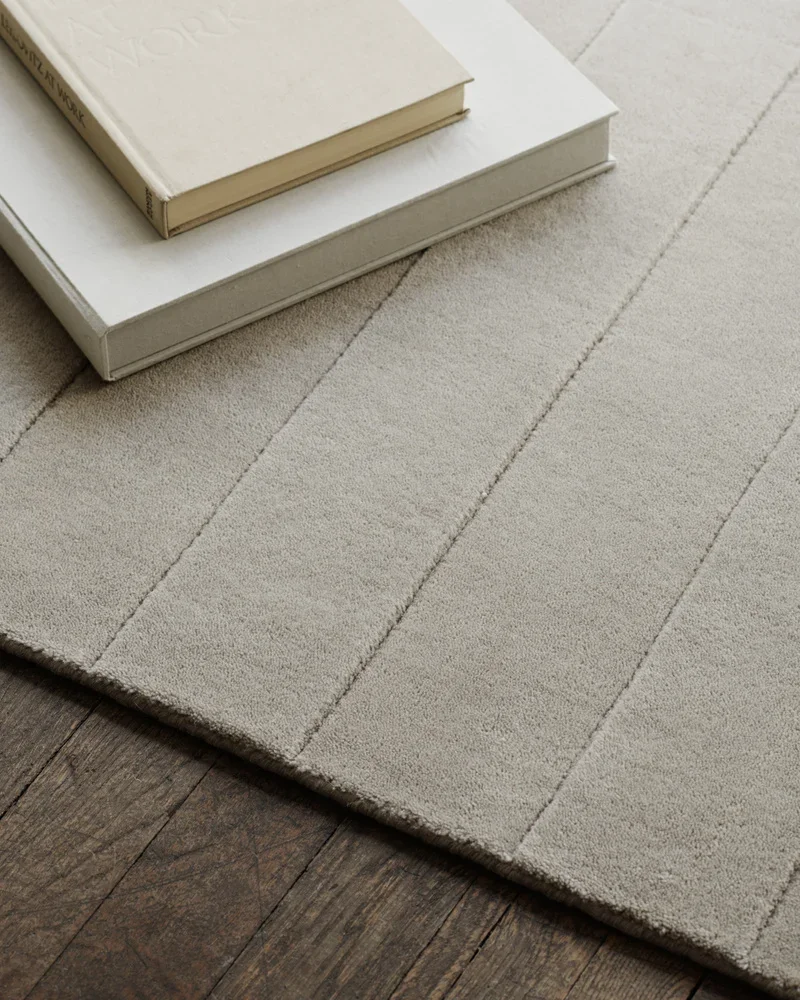
Image: Nordic Knots, Lux 2 Oatmeal
5. Use a Rug to Anchor the Seating Area
A rug does much more than add softness. It defines the visual boundaries of the seating arrangement and helps individual furniture pieces read as one composition.
Scale is critical. A rug that is too small can make a room feel fragmented, particularly in an open-plan space. Ideally, the main furniture pieces should have a clear relationship with the rug rather than appearing to float around it.
Texture can be just as important as pattern. A wool rug with subtle variation can introduce softness and dimension while allowing the furniture and architecture to remain visually dominant.
In a refined neutral space, the rug often works best as part of the material layering rather than as a standalone statement.
6. Layer Your Lighting
Good living room lighting should never come from a single source.
Architectural lighting provides the foundation, decorative fixtures add character, and accent or indirect lighting introduces atmosphere and depth. Floor lamps and table lamps can then bring light closer to the areas where people actually sit.
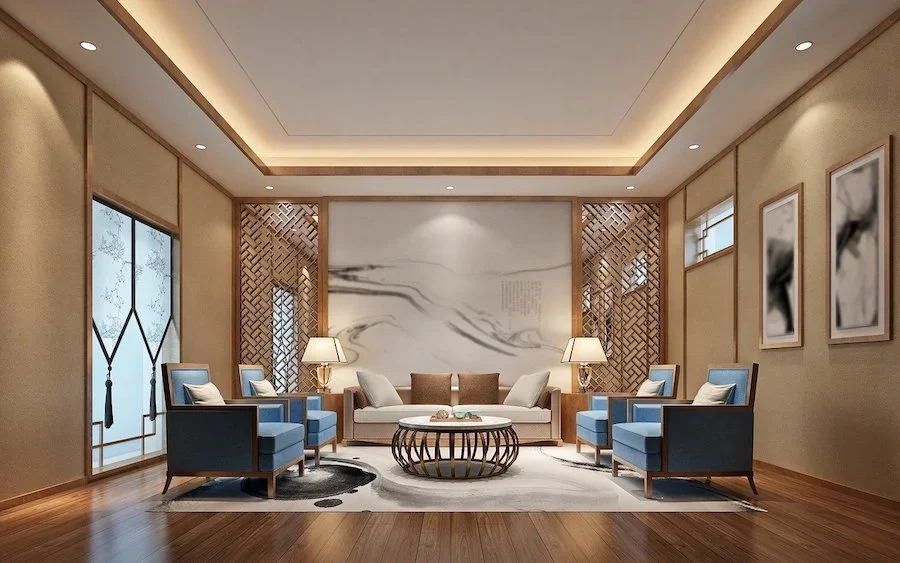
Image: GHT Group
Indirect lighting can be particularly effective because it illuminates the architecture without making the light source itself the focus. Cove lighting, integrated millwork lighting and concealed LED details can create a softer atmosphere while highlighting materials and architectural features.
Lighting also changes the way materials are perceived. It can reveal the grain of wood, emphasize natural stone and create shadows across textured surfaces.
Instead of expecting one chandelier or ceiling fixture to light the entire space, think about how several layers of light can work together throughout the day and evening.
7. Give the Room Space to Breathe
Not every wall needs furniture and not every empty corner needs to be filled.
Negative space is an important part of a refined interior because it gives the pieces that are present more visual importance. A sculptural chair feels more intentional when it has space around it. Artwork becomes more powerful when it is not surrounded by competing objects.
Leaving breathing room also improves circulation and can make the entire space feel calmer.
A luxurious room is not necessarily a room with more things. Often, it is a room where every element has earned its place.
8. Design Around the Way You Actually Live
A living room ultimately needs to work for the people who use it.
Some homes need a formal entertaining space. Others need a comfortable family room for television, children and everyday life. Many spaces need to do both.
These differences should influence everything from upholstery and furniture placement to storage, lighting and the durability of the materials selected.
A beautiful living room that is uncomfortable or difficult to use is not a successful design. The goal is to create a space that feels elevated while still making everyday life easier.
Creating a Living Room That Feels Refined and Inviting
The most successful living rooms are rarely defined by one statement piece. They come together through proportion, material, texture, lighting and the relationship between each element in the room.
Starting with a thoughtful layout, establishing a clear focal point and layering materials intentionally can create a space that feels polished without losing warmth or comfort.
At Interiors by AC, we design living spaces as part of the complete home, coordinating furnishings, custom millwork, finishes, lighting and architectural details to create a cohesive result.
If you are planning a renovation, furnishing project or complete interior transformation in Miami or South Florida, explore our full-service interior design services or get in touch to tell us about your project .
